

Culture of Freedom
Dernière mise à jour : 30 avr.
Intro
Not so long ago, a “simple” virus managed to bring the entire planet to a standstill. Fear, uncertainty, denial, distrust… everyone experienced that unprecedented situation in their own way.
While each person was free to form their own opinion or understanding of what was happening, one thing became universal for all of us: being ordered — or not — to stay confined at home and restricted to a suffocating one-kilometer radius around it.
For political and/or health reasons, we were all asked to give up a form of freedom — and I say form of freedom because nowadays one can legitimately wonder whether our freedom is ever truly complete. We never really realized how essential it was because it had become such an ingrained part of everyday life that most of us never stopped to philosophize about what it actually meant to be free.
Hours spent going in circles inside an apartment… that was what we were asked to do.
For nature lovers, as many of us are, the situation quickly became unbearable. Even city dwellers — some of whom had long looked down on people living in rural areas — fled their concrete and carbon dioxide prisons, sometimes never wanting to return.
Personally, I don’t think I was very far from a depressive state. Eventually, I realized that breaking certain pointless “rules” was far healthier than remaining locked away.
My salvation was where I’ve always felt best: by the water.
All this restriction created an intensified craving for freedom in countless people. And it’s probably no coincidence that outdoor lifestyles — the modern symbol of “freedom” — have never experienced such explosive growth as they do today.
Freedom
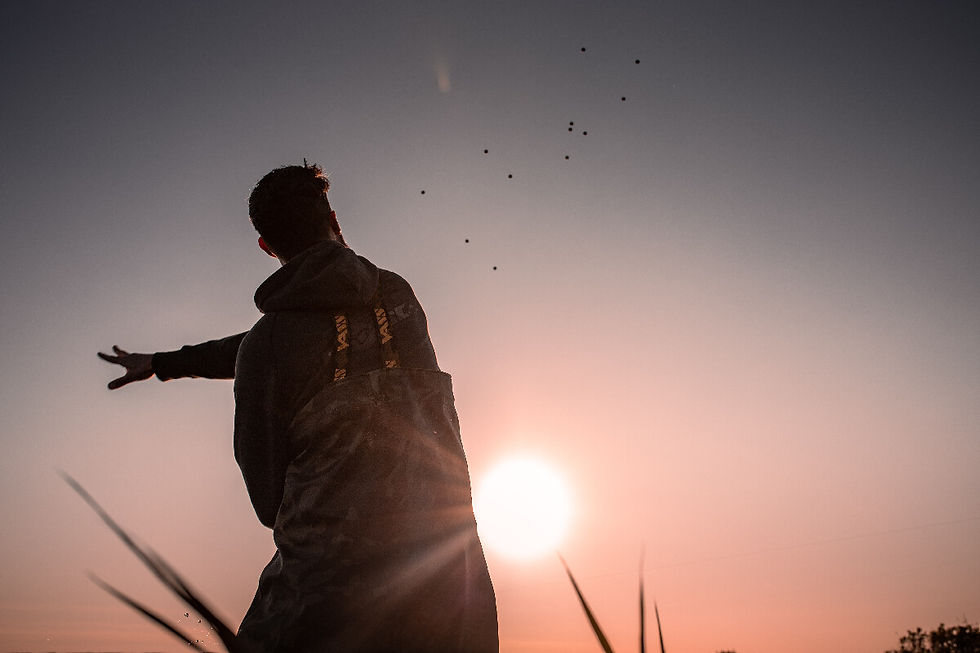
The feeling of freedom — truly being free — isn’t really something that can be described with words. It’s something you live, something you feel.
In its purest form, it creates a sensation of fullness, almost ecstasy.
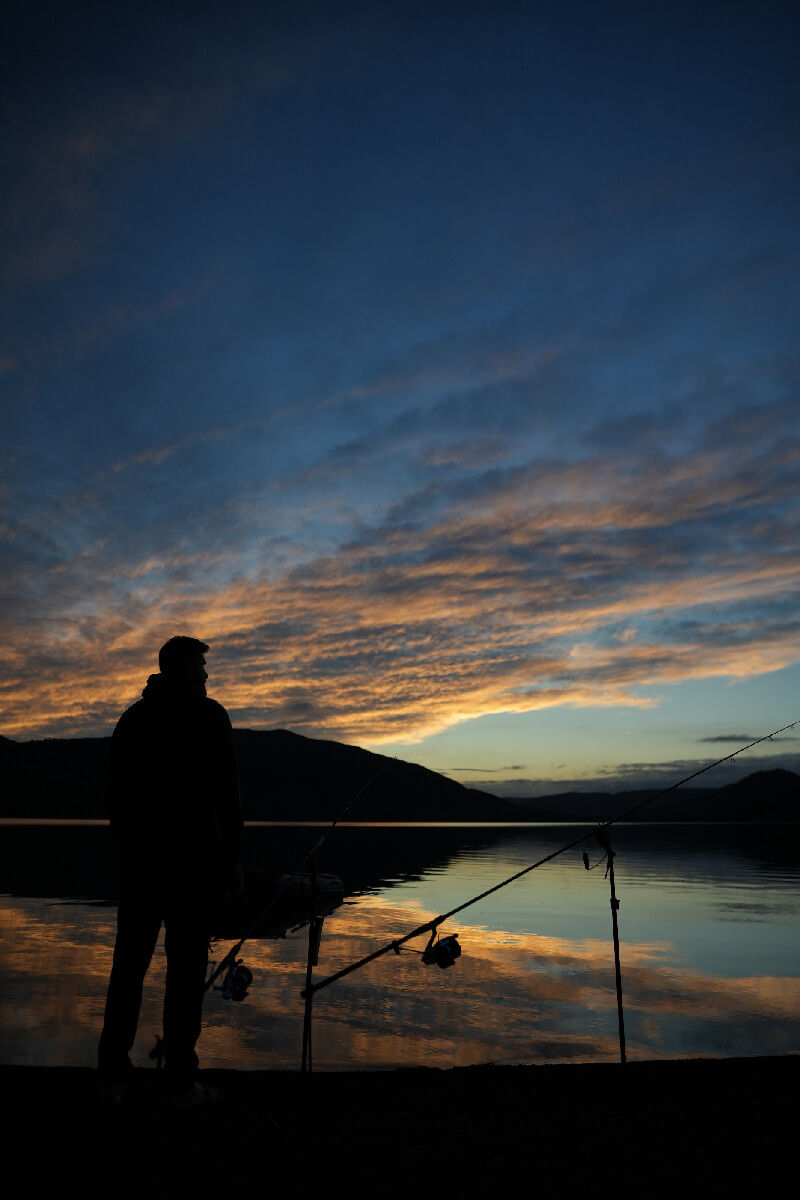
Freedom can be experienced in countless ways, and from an angler’s perspective, it becomes amplified by the elements surrounding us: silence, wild nature, the gentle sound of water lapping against the margins, the cries of migrating cranes…
In reality, it’s everything that emotionally resonates with the individual who opens themselves to an experience capable of delivering that sensation of freedom.
Subjectivity is an entirely unique parameter among anglers.
One person will find peace in a structured environment where calm is relative and where they can enjoy their passion without worrying about outside disturbances.
Another, on the contrary, will find release in fishing without boundaries or limitations — except those they choose to impose on themselves.
Personally, I belong in that second category.
Of course, there are as many visions of freedom in fishing as there are anglers on this earth, even if some share a common philosophy.
That vision evolves over time. It’s constantly changing and never completely fixed for those who continually question themselves and reflect on how to improve the way they live their passion.
In the end, freedom belongs to everyone, and the way we define it is deeply personal — otherwise it would no longer truly be freedom.

Vision and Reality
As I mentioned earlier, the definition and understanding of freedom in relation to our passion is something entirely personal.
Now I’m going to share my own vision of it, along with what I believe are some uncomfortable truths about the reality of the situation and the ground we are slowly losing ourselves.(Shooting ourselves in the foot has become quite fashionable these past few years.)
March 2023.
My two friends Dylan and Soël are preparing to leave for a month-long road trip abroad. A real adventure is taking shape — at least according to my own definition of adventure.
The plan sounds incredibly exciting and the trip feels full of promise.
The guys invite me to join them.
Unfortunately, my personal situation forces me to decline.
The bitterness of that decision lingers for weeks. I envy my friends, but I’m genuinely happy for them because I know they’re about to discover mysterious waters potentially filled with fish untouched by human pressure in many ways.
May 2023.
The boys are only days away from departure when my personal circumstances suddenly change. At the very last moment, I decide to join the adventure.
I won’t be able to stay for the entire month, but I can fly out and spend fifteen days with them.
On arrival day, Soël picks me up from the nearest airport.

The guys have already been there for over a week. The baiting campaigns are underway and the first fish are already being caught.
That’s when I discover a majestic lake with barely any visible human presence.
Here, mankind hasn’t yet left the scars so common on many of our French waters.
The DNA of this trip is built around sharing.
There’s no ego competition. We fish with three brains working together, each person contributing whatever they can to make the experience as perfect as possible.
The fish don’t belong to one person more than another.
Everything flows naturally. Everything unfolds in simplicity, good vibes, and harmony.
And luck smiles upon us.
We catch a fish so surreal that it almost feels mythical — the kind of carp we had all dreamed of holding in our arms one day.
From that moment on, the three of us wore the same stupid grin — the kind that only appears when someone experiences a true state of grace.
There we were, having crossed borders simply to live our passion the way we had always imagined it.
We rediscovered a form of freedom that is unfortunately becoming increasingly rare in France, for reasons I’ll try to explain later on.
When I return home, the boys continue experiencing a trip so extraordinary that none of us could ever have written a story capable of matching it.
Our endorphin tanks are overflowing.
In fact, the experience impacted us so deeply that two of us went through a period of complete emotional disorientation afterward — without ever discussing it together beforehand.
We had experienced such an overload of emotion that returning to France turned into a dull mixture of melancholy and numbness.
Fishing back home almost felt tasteless.
The contrast between what we had experienced abroad and what we knew in France had become too great.
We simply didn’t feel like fishing anymore.
To fill that need for nature and escape, two of us eventually turned toward hiking through parts of the Alps, searching for environments capable of recreating even a fraction of what we had experienced abroad.
Months later, we gradually found our way back to the banks of our magnificent French waters, trying our best to ignore some of their growing flaws.

The Drift
We need to remain realistic: from my point of view, French carp fishing waters are suffering from numerous negative developments — and we are all partly responsible.
The truth is simple: there are more and more carp anglers across France and Europe.
France is probably one of the richest countries in Europe when it comes to fishing opportunities: rivers, canals, gravel pits, reservoirs, dams…
All of these waters hold highly sought-after carp pursued by an enormous number of anglers, both French and foreign.
And this constant pressure inevitably impacts the environment.
Many waters have become victims of overexposure through mass media and social networks. Finding space on lakes covering hundreds of hectares is sometimes becoming impossible.
To make matters worse, there are even places where foreign teams rotate for months on the same sector, making it completely inaccessible to others.
When we come to the water, it’s to find peace and the freedom to move in search of fish.
Nowadays, mobility itself can become impossible on a 700-hectare lake simply because there’s an angler every fifty meters.
While some people may enjoy that atmosphere, it’s very far from what many others consider freedom to be.
The freedom to move.The freedom to be isolated.The freedom of silence.The freedom to fish the way we truly want.
And unfortunately, overcrowding has visible consequences.
Fish stocks are increasingly mistreated.
We now regularly see fish with badly damaged mouths, broken fins, and countless other injuries.
The direct responsibility lies with anglers and the careless way some handle fish.
No-kill fishing is not simply about releasing the fish afterward.
No-kill begins the moment the rig is placed in the water and lasts until the fish regains its freedom.
More indirectly, many other factors contribute to these problems.
The mentality encouraged by social media in recent years is far from innocent.
Ego has become so dominant that the health of the waters and their inhabitants often feels secondary.
Today, many people think more about online hype than common sense.
In that regard, many of us are guilty — though at very different levels.
Under the excuse of “sharing,” people no longer hesitate to expose hidden waters to the masses, sacrificing places where freedom once truly existed.
I also consider myself guilty of participating in this self-sabotage.
Maybe the saying “to live happily, live hidden” is beginning to make more sense than ever.
And I believe it’s never too late to rethink the way we approach things.
With today’s technology, it’s entirely possible to remain discreet about locations.
Mystery and Freedom
If there’s one final point deeply connected to freedom, it’s the culture of mystery.
Without criticizing information-based fishing or fishing on tips, there’s something incredibly special about the unknown.
The search itself adds another layer of meaning to the pursuit of freedom and fulfillment by the water.
Discovering fish and catching them through your own efforts provides a far deeper satisfaction for those capable of appreciating it.
Of course, this remains entirely subjective and simply reflects my personal way of seeing things.
Freedom belongs to each individual.
It’s highly subjective, and everyone can find balance somewhere different.
Many people place barriers in front of themselves and never fully live their passion because they stop at limits imposed only by their own minds.
The culture of freedom depends entirely on us.
But for that to exist, certain realizations must happen — beginning with protecting these waters that are true paradises.
Because paradises can quickly become hells, and when that happens, the party ends fast.
So let’s preserve mystery.For ourselves.For others.
And above all, let’s enjoy ourselves by the water.
Romain
YouTube Goblin Mode: ON
If you made it all the way down here, it means you actually read the whole article.Or you violently scrolled to the bottom like a caffeine-fueled raccoon and this weird little note caught your eye.
Either way, if you enjoyed this page, feel free to drop a like, leave a comment, or share it around on your socials.Apparently that stuff makes the SEO gods happy or something.
And if you really want to support us in our noble mission of producing questionable fishing-related internet literature, you can also toss us a few digital coins. Because writing, editing, formatting, and making these articles readable for both humans and Google takes a stupid amount of time.
And if you couldn’t care less about any of this, you can also go cook yourself some pasta.That works too.
Cheers


Commentaires